
TikTok Video Metadata: How Watermarks are Embedded in MP4 Files
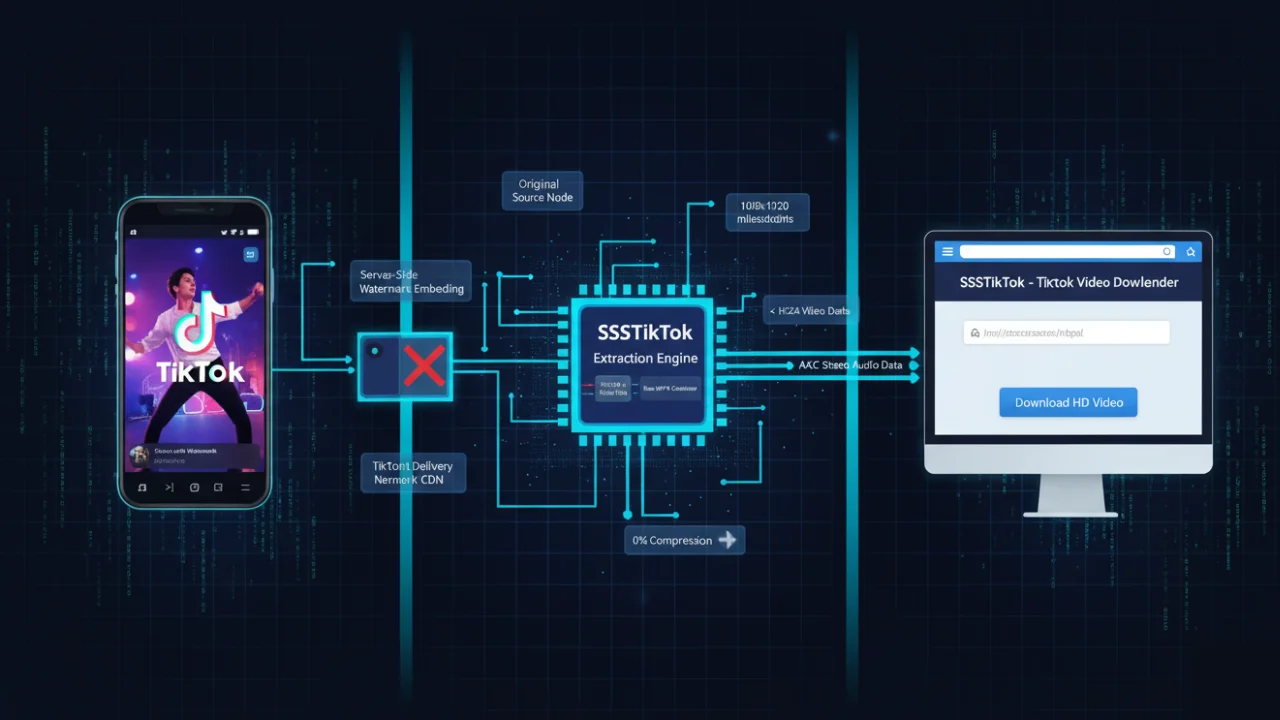
SSSTikTok is a web-based media processing utility and online downloader engineered to parse social media application programming interfaces (APIs) and extract raw media files before server-side rendering overlays are applied. SSSTikTok intercepts the content delivery network (CDN) payload to execute a clean MP4 download directly from the source TikTok URL.
Metadata Architecture and Server-Side Watermark Embedding Protocols
TikTok incorporates digital watermarks by utilizing server-side encoding scripts that alter the visual data of the media stream. The encoding scripts read the metadata parameters of the uploaded file and burn the platform logo into specific pixel coordinates of the video frames. The TikTok video download feature native to the application triggers a rendering command. If the native application executes the download command, the server forces the overlay onto the media file, generating a modified output file.
Algorithmic Extraction Process for Watermark Removal
The watermark removal mechanism relies entirely on avoiding the modified output file and querying the original source node. A dedicated video downloader identifies the specific alphanumeric string within the uniform resource locator (URL). The TikTok downloader sends a request header mimicking an internal application programming interface call. Because the internal application programming interface call requests the raw database entry, the server returns the media stream without activating the watermark rendering sequence.
The extraction sequence follows strict chronological operational phases:
- The client provides the specific video uniform resource locator to the parsing engine.
- The online TikTok downloader extracts the unique media identifier from the submitted link.
- The processing engine queries the TikTok content delivery network using the isolated media identifier.
- The content delivery network responds with the raw HD video source file index.
- The interface presents the direct network protocol, allowing the user to download TikTok without watermark.
Entity-Attribute-Value Metrics for Clean Media Delivery
Delivering uncompressed media requires strict adherence to network transfer limits and bandwidth allocation. The TikTok save video function processes data based on exact metric thresholds. If the target file size exceeds the buffer limit, the system initiates multi-thread chunk downloading.
| System Entity | Process Attribute | Metric Value |
|---|---|---|
| Source MP4 File | Video Resolution | 1080×1920 Pixels |
| Extraction Engine | Query Response Time | < 800 Milliseconds |
| Content Delivery Node | Bandwidth Capacity | 50 Megabits per Second |
| Output Data Stream | Compression Rate | 0% (Lossless Extraction) |
The lossless extraction preserves the exact pixel density of the original creator upload. Media components utilize specific container formats during the transfer phase. The container formats categorize audio and visual data streams into multiplexed tracks.
- H.264 Advanced Video Coding Data Stream
- Advanced Audio Coding (AAC) Stereo Track
- Extensible Metadata Platform (XMP) Metadata Tags
The Extensible Metadata Platform tags contain the original author identification codes and creation timestamps. Bypassing the watermark generation engine ensures the Extensible Metadata Platform tags remain untampered and algorithmically readable for subsequent media analysis platforms.